

We put on our fairy wings and coronation crowns, visiting each house in sight, and filling our sacks with candy. We may laugh at each other’s outfits, seeing one friend dressed as a bumblebee while the other cosplayed as Coraline. We may come home flushed from all the fun we registered that night, only to fall asleep with a stuffed face. The synonymous commercialism of Halloween has not always been a given. The festival used to be much grander than that.
The word “Halloween” comes from the word ‘Hallow,’ meaning a holy person, and ‘een’ used as a contraction of eve. We can link the origin of the event back hundreds of years ago, celebrated during the Iron Age when ancient Celtic pagans celebrated Samhain in its peak.
Traditionally, Samhain is a Gaelic festival spanning from the 30th of October to the 1st of November. It applauds death and rebirth. The division between the physical world and the spiritual world was at its thinnest, meaning spirits were able to pass through with ease. Delving deeper into the celebration, you would learn that it was not meant to be satanic or cultist as the festival is modernly represented. It was meant to allow families to connect with late loved ones while warding off the “evil spirits” to keep the grounding they craved. All Saints, celebrated on November 1st, is now a permanent world spread replacement used for honouring the dead. The Irish Celts emigrated to America where they shared bits and pieces of their culture, and thus began the globalisation of such a controversial festival.
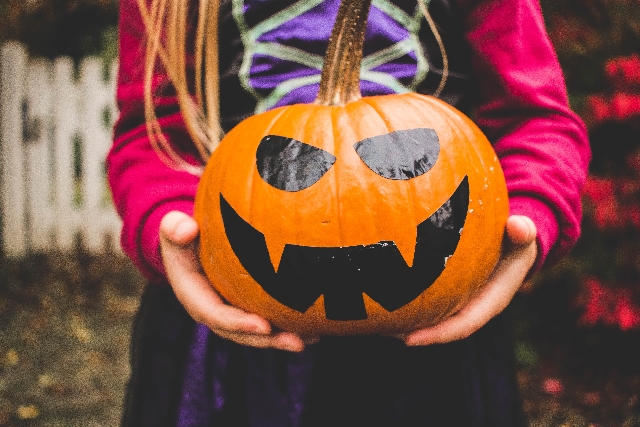
Multiple Celtic traditions have survived evolution and have grown to be more innocent in American standards. Firstly, the ideology behind costumes originally was meant to oppose evil spirits. People dressed as animals to scare off the unwanted entities and keep their circle of spirits limited to deceased family members. Now, we use costumes to portray our favourite characters and embrace our current obsessions. Secondly, jack-o-lanterns stem from people carving spooky faces onto turnips to ward off wandering souls. The turnips eventually shifted to pumpkins when Irish immigrants moved to the US and found that pumpkins grew in prosperity. Another common Halloween trend was the use of candy. Trick or treating was inspired by children in mediaeval Europe who could go knocking door to door, begging for food and money during the Celtic Holiday. In exchange, they would pray for the souls of their neighbours’ deceased loved ones.
Another extremely common way we currently celebrate Halloween is by the absorption of cinema, thus a few of our writers here and here have reviewed iconic Halloween movies typically played in family households when the clock strikes midnight.