
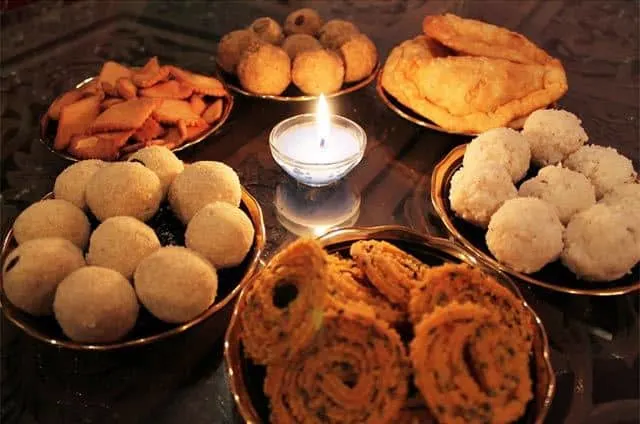

Burfi
Deepavali is a Sanskrit word that means “row of lights or festival of lights,” This is the term commonly used in South India and North India; it is called Diwali.
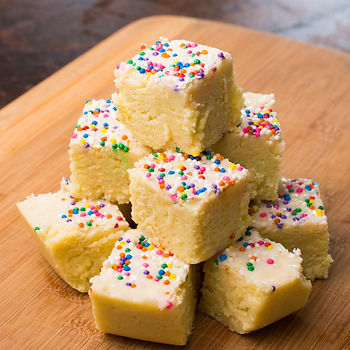
Burfi is a popular Indian milk-based sweet recipe prepared during festivals like Diwali or Deepavali, Holi, Rakhi, and any special occasions like birthdays and weddings.
Ingredients
- 1 cup besan flour
- 3 cups sugar
- 1 cup ghee melted
- 1 cup coconut or carrots
- 1 cup milk
Method
- First, select a cup to use for measuring all the components. I used a third of a cup. In a skillet, toast the besan flour until the scent appears, but do not allow it to change color. Turn off the computer.
- Clean and grate the coconut. Add it to the pan after measuring.
- Add sugar first, then milk. Finally, add the ghee.
- Now, whisk it thoroughly to ensure even mixing, and no lumps occur. Now heat it; it will first boil up.
- It bubbles wonderfully and then produces foamy layers around the edges.
- You may feel the mixture thickening as you mix.
- Continue to cook.
- Then it will simply leave the pan’s sides with a porous texture.
- Transfer the mixture to a greased tin right away. Mark with a greased knife while it is still warm, then carefully remove the pieces and serve.
Gulab Jamun
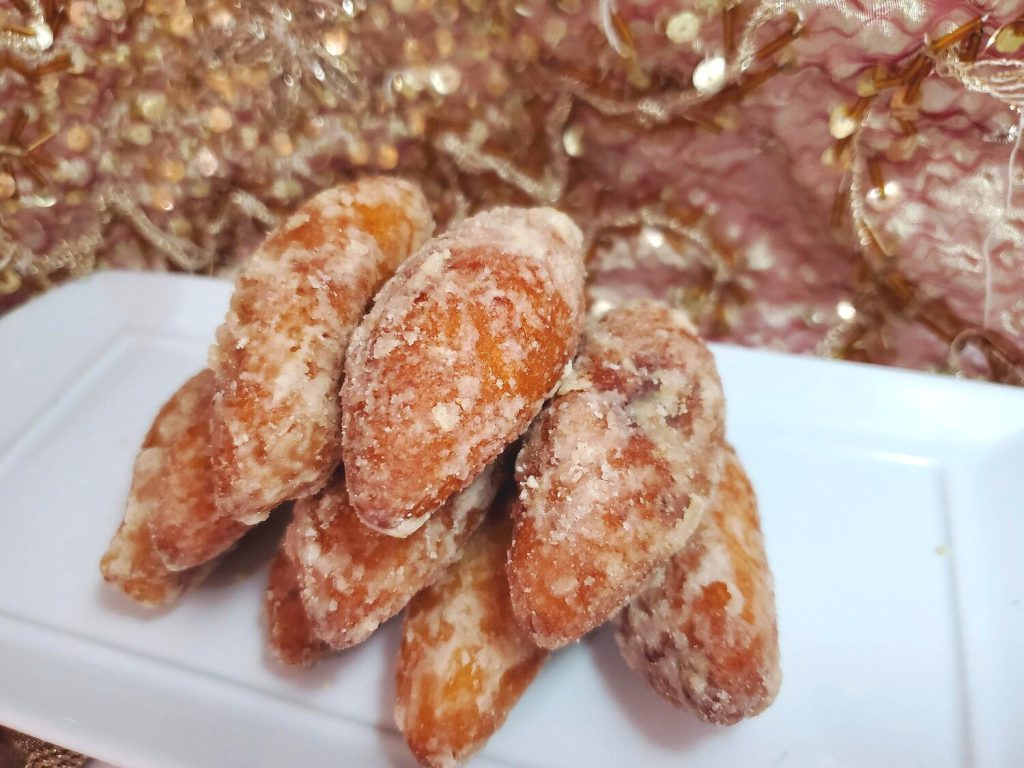
Gulab Jamun is a delicious, famous sweet made by frying Jamun mix dough balls and dunking them in flavoured sugar syrup.
Ingredients
- 1 cup Jamun mix
- water as needed
- oil to deep fry
- chopped pistachios just for garnish
- ghee to grease your palm
For the sugar syrup:
- 2 cups sugar
- 2 cups water
- 5 strands saffron
- Take whichever Jamun mix you like, transfer it to a sieve, and sift thoroughly. If there are any lumps, crush them with your fingertips and sift the mixture.
- Then measure it out and put it in a mixing dish. Slowly pour in the water. I used about a quarter cup of water. You may also use milk instead of water.
- It should simply stick together to produce a sticky mass. Do not knead; instead, combine with your fingertips. Do not be alarmed by the sticky dough; if the dough is too stiff, your jamuns will dry and shatter when frying. Set aside the dough for 15 minutes.
Method:
- Put sugar in a pan with water.
- Allow coming to a boil before adding the saffron. Combine it with the sugar.
- Boil the syrup until it becomes thick; no consistency check is needed, but the syrup will have the consistency of oil. It will be as shiny as oil.
- Set aside to cool after adding the rose essence. After 15 minutes, take the dough.
- Ghee your hand, squeeze the dough and roll it into a tiny smooth ball with no splits. While moving, do not apply any pressure.
- Heat the oil in a Kadai until it is not blazing hot. Pinch a small piece of dough and place it in the oil; it should gently rise to the top, showing the correct temperature. If the dough begins to rise, quickly turn off the heat. Maintain the heat on a low medium throughout the procedure and constantly adjust the flame.
- While frying, do not touch the spheres; instead, stir the oil with a ladle or spoon to ensure that the jamuns are uniformly cooked. While cooking, the Jamun expands.
- Continue to stir the oil and cook until golden brown on a low, medium temperature.
- Remove and blot with tissue paper. Allow for 2 minutes on tissue paper. Add jamuns and syrup are heated, add the jamuns to the sugar syrup when heated.
- Allow it to marinate for at least 2 hours before serving. You may then chill it if you like.
Gulab Jamun can be served warm or cold.
Motichoor Laddu
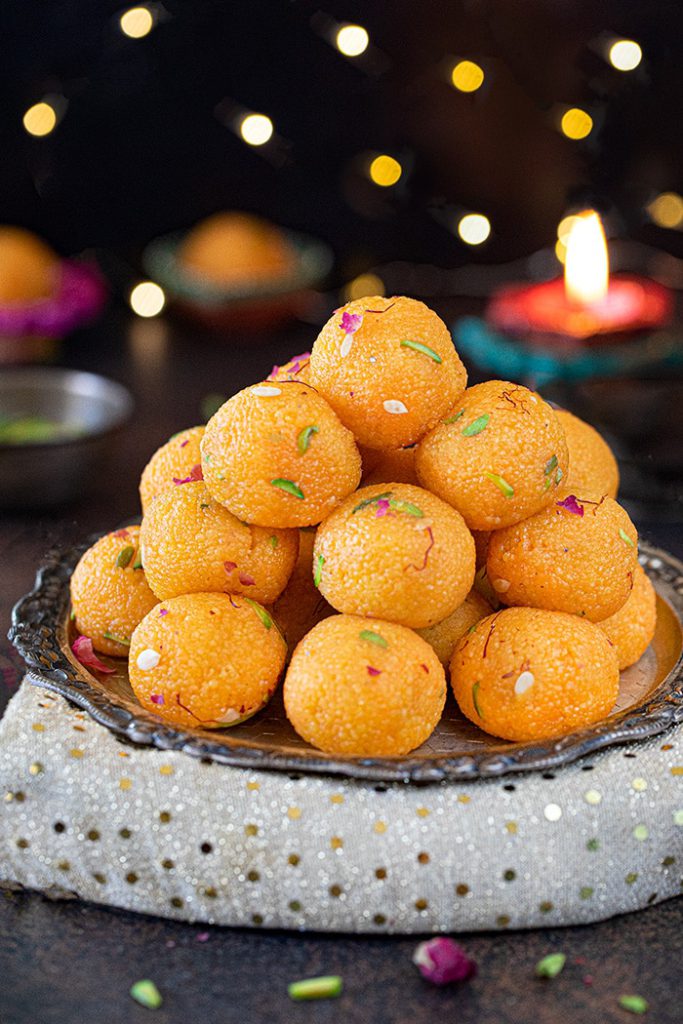
Motichoor Laddu is a tasty delight made by frying tiny balls of besan flour, coating it with flavored sugar syrup & shaping them into ladoos. Motichur Laddu is commonly made during Diwali, Ganesh Chaturthi, and special occasions. Motichoor Ladoo Recipe is simple & a must-try at home.
Ingredients
- 1 cup besan flour
- few drops of food colour
- 2 tsp ghee
- 1 heaped tsp melon seeds
- oil to deep fry
To make sugar syrup:
- 3/4 cup sugar
- 1/2 cup water
- 2 drops of rose essence
- 1/8 tsp cardamom powder
- 1/4 tsp lemon juice
- Besan flour, coarsely ground, should be placed in a mixing basin. Now add the ghee.
- Add 2 drops of orange food colouring now. Mix it thoroughly with a whisk. Directly pour in a bit of water.
- Add a little water to make a thick paste, then add a bit more.
- The batter should be thinner and have more food colour than the dosa batter. It should be free of impediments.
Method
- Take your spoon now. – Heat a Kadai with oil and keep a higher (than the Kadai) box away from the Kadai. Place a folded kitchen towel atop the box, and the ladle rest on top of it. I have shown you how to do it.
- Pour the batter into the heated oil.
- The batter should fall into the oil in a sprinkled pattern, giving miniature boondis.
- Do not cook any longer; when the shh sound stops, take it out and drain it on tissue paper. Repeat this procedure until the batter is finished. Now and again, wipe the spoon with a towel.
- Once all the boondis are fried, take a tbsp and pulse it in the mixie once or twice (this step is optional), then leave aside.
- How to Make Sugar Syrup:
- In a saucepan, melt the sugar.
- Warm it up by adding water. Heat it until the sugar melts, stirring often.
- Please remove it from the flame when it reaches one-string consistency. Now
- Cardamom powder and rose essence should be added.
- As well as a few drops of orange food colouring. Finally, squeeze in the lemon juice.
- How to Make Motichoor Ladoo:
- Add the cooked boondis to the pan with the sugar syrup and melon seeds. Using a spoon, thoroughly combine all ingredients. Cover and set aside for at least 10 minutes to allow all the syrup to soak.
- Open it up, fluff it up, and thoroughly combine it before beginning to shape the ladoos. Squeeze, and make ladoos. Place it on a plate to cool before storing.
Rasgulla
Rasgulla is a juicy milk sweet made by dunking curdled milk dollops in sugar syrup; Rasgulla is a popular Bengal delicacy made on special occasions & Diwali across India but relished every other day after a meal in Bengal.
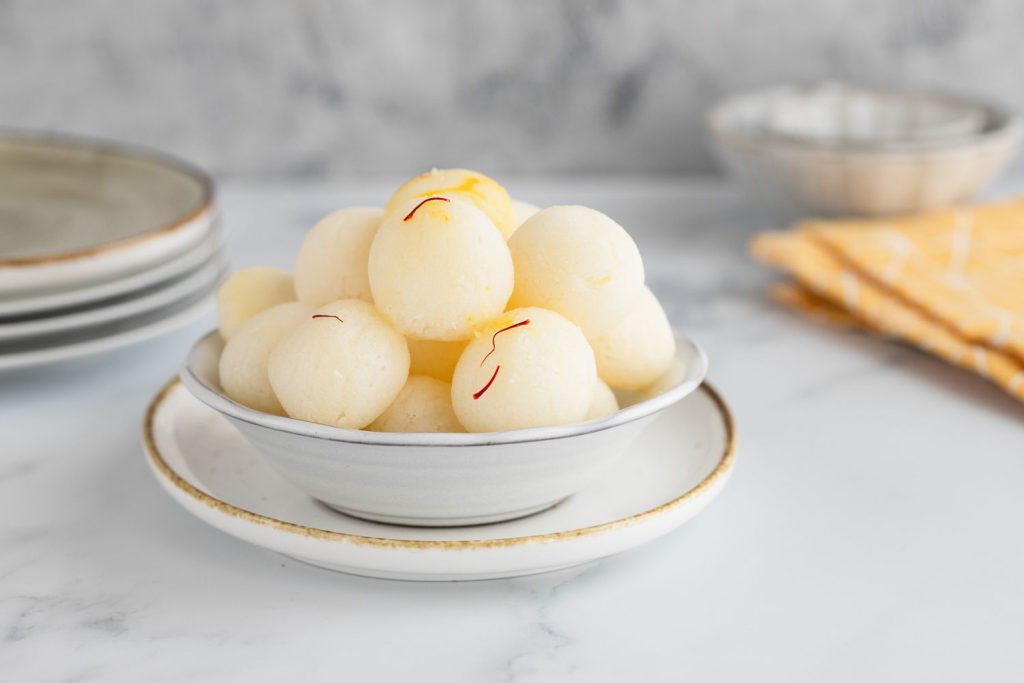
Ingredients:
- 1litre milk
- 1/4 cup curd
- few ice cubes
- 1 cup sugar
- 3 cups water
- a generous pinch of cardamom powder
- 5 nos pistachios for garnish
Method:
- Bring the milk to a boil. Then add the curd and continue to stir. Allow the mixture to curdle.
- Stir continuously until the whey water clears and the milk curdles. Please turn off the heat, add the ice cubes, and let them melt completely. The whey water is now plainly visible.
- Pour the curdled milk onto a muslin cloth and fully filter the whey water. If you use lemon juice to erase the flavour, wash it well in freezing water.
- Squeeze the excess water and let it aside for 30 minutes without moving it. The paneer would be crumbly after 30 minutes.
- Knead it for at least 20 minutes.
- Kneading for a more extended period results in soft and spongy rasgullas, so be patient. See how smooth the dough has gotten after 20 minutes of kneading.
- Pinch a little dough, make neat balls, and set aside. I created around 20 balls and put them away.
- In a wide-bottomed saucepan, heat the water, then add the sugar.
- Keep swirling until the sugar is completely dissolved—Cook for 5 minutes.
- When the sugar syrup begins to boil and bubble, add the balls one at a time. Move the balls to the centre once they have gone to the corner.
- Maintain a medium flame and cover with a lid. Cook for 10 minutes, covered.
- After 10 minutes, the balls would have nearly doubled.
- Please turn it off and leave it closed for 15 minutes.
- Then cool and add chopped pistachios before chilling until ready to serve.